Content
- What Is Typography Psychology?
- Why Your Brain Reacts to Fonts Before You Read a Word
- The 5 Core Font Categories and the Emotions They Trigger
- What Does Your Font Choice Say About You?
- Font Personality Types
- The Psychology Behind Fancy Text and Stylish Fonts Online
- Why Stylish Text Gets More Attention on Social Media
- How Emojis and Symbols Add Meaning
- Create Attractive Fonts to Impact Reader Psychology with Text to Font
- Font Psychology in Branding: Real-World Examples
- The Disfluency Effect: When Harder-to-Read Fonts Can Help
- Typography Psychology Across Different Platforms
- Common Typography Psychology Mistakes to Avoid
- How to Choose the Right Font or Fancy Text Style
- Conclusion
- Frequently Asked Questions About Typography Psychology
The Psychology of Typography: Why Font Choice Matters
Have you ever noticed how the same message can feel different depending on the font used? A wedding invitation written in elegant script creates a very different impression than the same words displayed in a bold, blocky typeface.
This is the foundation of typography psychology, the study of how fonts influence emotions, perceptions, and behavior. From brand logos to social media bios filled with stylish text, typography communicates meaning before a reader processes a single word.
Understanding these psychological effects can help you choose fonts that better match your message and make a stronger impression.
What Is Typography Psychology?
Typography psychology is the study of how typefaces affect the way people perceive information. Fonts do more than display words. They influence whether content appears trustworthy, modern, playful, professional, or creative.
Research has shown that people often form impressions about text before consciously reading it. The visual style of letters creates expectations about the message and the person or brand behind it.
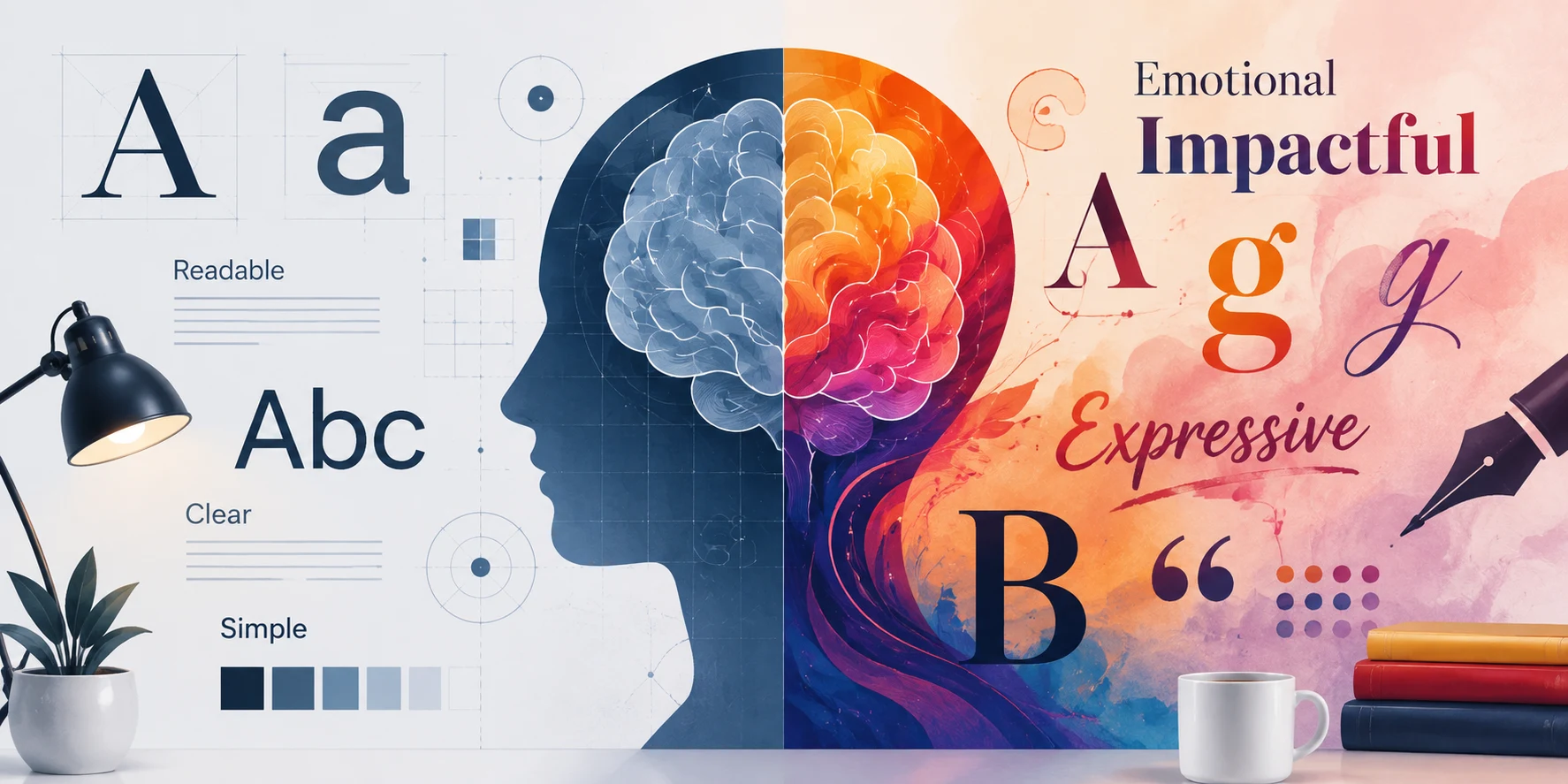
Why Your Brain Reacts to Fonts Before You Read a Word
The human brain is designed to make quick judgments. When readers encounter text, they instantly process visual cues such as shape, spacing, and style.
This is closely related to a concept called processing fluency, which refers to how easily information can be understood. Fonts that are clear and familiar often feel more trustworthy because they require less mental effort to read.
Decorative and unusual fonts attract attention because they break expectations and stand out from surrounding content.
The 5 Core Font Categories and the Emotions They Trigger
While every typeface has its own personality, most fonts fall into a few broad categories that tend to evoke similar feelings.
Serif Fonts: Trust, Authority, and Tradition
Serif fonts feature small decorative strokes at the ends of letters. Examples include Times New Roman, Garamond, and Baskerville.
These fonts are commonly associated with:
Trustworthiness
Professionalism
History and tradition
Formality
This is one reason universities, newspapers, and financial institutions have traditionally favored serif typefaces.
Sans-Serif Fonts: Clarity, Modernity, and Simplicity
Sans-serif fonts remove the decorative strokes found in serif typefaces. Popular examples include Helvetica, Arial, and Roboto.
They are often associated with:
Simplicity
Modern thinking
Accessibility
Clean design
Many technology companies use sans-serif fonts because they feel contemporary and perform well on digital screens.
Script and Cursive Fonts: Elegance and Personality
Script fonts mimic handwriting and calligraphy. Examples include Lobster, Pacifico, and Dancing Script.
People often associate script fonts with:
Creativity
Luxury
Romance
Personal expression
Because they feel more human and expressive, script fonts are commonly used in invitations, beauty brands, and stylish social media profiles.
Display and Decorative Fonts: Attention and Impact
Display fonts are designed to stand out rather than support long-form reading.
These fonts typically communicate:
Energy
Boldness
Excitement
Uniqueness
They are frequently used in advertisements, gaming content, posters, and attention-grabbing headlines.
Handwritten and Novelty Fonts: Playfulness and Creativity
Handwritten and novelty fonts often feel casual and approachable.
Common associations include:
Friendliness
Fun
Creativity
Individuality
These styles are especially popular among younger audiences and online communities that value self-expression.
What Does Your Font Choice Say About You?
Typography is not just a branding tool. It is also a form of personal expression.
Just as clothing, hairstyles, and profile pictures communicate aspects of identity, font choices can shape how others perceive you online. The text style used in a username, bio, or social media post often sends subtle signals about personality.
A clean sans-serif style may suggest professionalism and simplicity. A decorative script font may suggest creativity and elegance. Bold stylized text can communicate confidence and individuality.
Font Personality Types
Different text styles often create different impressions:
Bold styles: Confident, assertive, attention-grabbing
Cursive styles: Elegant, artistic, sophisticated
Minimal styles: Professional, modern, clean
Decorative styles: Creative, playful, expressive
Glitch or aesthetic styles: Alternative, edgy, trend-focused
These associations are not fixed rules, but they help explain why people are drawn to certain styles when presenting themselves online.
The Psychology Behind Fancy Text and Stylish Fonts Online
The rise of social media has transformed typography from a design discipline into a personal identity tool.
Fancy text generators allow users to convert ordinary text into stylized Unicode characters that resemble different fonts. Although these are technically not traditional fonts, they create similar psychological effects.
Stylish text stands out because it introduces visual contrast into environments dominated by plain text. When people encounter something visually different, their attention naturally shifts toward it.
Why Stylish Text Gets More Attention on Social Media
Several psychological principles help explain why stylish text is popular online:
It interrupts scrolling patterns.
It creates visual novelty.
It signals effort and creativity.
It helps profiles appear more memorable.
In crowded feeds where hundreds of posts compete for attention, even small visual differences can increase visibility.
How Emojis and Symbols Add Meaning
Typography is no longer limited to letters alone.
Symbols, decorative characters, and emojis often work alongside stylish text to create a stronger emotional impression. They can:
Add personality
Improve visual organization
Communicate tone
Signal community membership
Many online aesthetics, including Y2K, kawaii, and minimalist styles, rely heavily on combinations of typography, symbols, and visual elements.
Create Attractive Fonts to Impact Reader Psychology with Text to Font
Typography psychology shows that the style of your text can influence how people perceive your message. Text to Font helps you apply these principles by converting plain text into stylish and decorative fonts in seconds.
Different font styles create different impressions:
Bold fonts can communicate confidence and authority.
Cursive fonts can convey elegance and creativity.
Decorative styles can make text feel unique and expressive.
Aesthetic fonts can help build a recognizable online identity.
Whether you're creating a social media bio, username, caption, or personal brand, Text to Font lets you experiment with different styles and choose one that matches the impression you want to make. Best of all, it's completely free to use.
Font Psychology in Branding: Real-World Examples
Successful brands carefully choose typography because fonts influence how customers perceive them.
Consider a few well-known examples:
Brand
Typography Style
Psychological Effect
Coca-Cola
Script
Nostalgia, warmth, familiarity
Disney
Script
Imagination, magic, creativity
Netflix
Bold display style
Confidence, entertainment, impact
Sans-serif
Simplicity, accessibility, friendliness
The same principle applies to personal branding. Social media creators often use typography strategically to reinforce the image they want to project.
The Disfluency Effect: When Harder-to-Read Fonts Can Help
Most typography advice focuses on readability, and for good reason. Easy-to-read fonts generally provide the best user experience.
However, psychology research has identified a phenomenon known as the disfluency effect. In some situations, slightly harder-to-read text encourages people to slow down and pay more attention, which can improve memory retention.
This does not mean difficult fonts are always better. Instead, it suggests that decorative typography can be useful when applied strategically.
A practical rule is simple:
Use clear fonts for body content.
Use distinctive fonts for emphasis and memorability.
Typography Psychology Across Different Platforms
The effectiveness of typography often depends on context.
Different platforms have different user expectations:
Instagram: Visual expression is highly valued, making stylish text and symbols more common.
TikTok: Bold, attention-grabbing text works well in fast-scrolling environments.
Discord and gaming communities: Decorative usernames and symbols help users create unique identities.
LinkedIn: Clean, professional typography tends to perform best.
The most effective typography aligns with the culture of the platform and the audience viewing it.
Common Typography Psychology Mistakes to Avoid
Even good font choices can lose their impact when used incorrectly.
Some of the most common mistakes include:
Using too many font styles at once
Prioritizing style over readability
Choosing a font that conflicts with the message
Overusing decorative text
Ignoring mobile readability
Using stylized Unicode text for essential information
Typography should support communication, not compete with it.
Typography also matters when content is translated. In books and long documents, changes to fonts, spacing, or page structure can affect readability and tone across languages. BookTranslator translates complete PDF, EPUB, and DOCX files while preserving layout and images, helping translated documents keep a consistent visual structure.
How to Choose the Right Font or Fancy Text Style
Selecting the right typography becomes easier when you focus on the message you want to communicate.
Follow this simple process:
Identify the emotion you want to create.
Consider where the text will appear.
Choose a font category that matches the desired feeling.
Test readability on different devices.
Use decorative styles selectively for emphasis.
If you're experimenting with stylish text, a fancy text generator can help you compare multiple styles quickly and find one that matches your intended tone.
Conclusion
Typography psychology shows that fonts are far more than decorative design elements. They influence trust, attention, emotion, and identity before readers consciously process a message.
From traditional serif typefaces to stylish Unicode text used on social media, every typography choice communicates something about the content and the person behind it. By understanding these psychological effects, you can choose fonts that reinforce your message and create stronger connections with your audience.
Frequently Asked Questions About Typography Psychology
What is typography psychology?
Typography psychology is the study of how fonts influence emotions, perceptions, and behavior. It examines how people respond to different typefaces before they fully process the content itself.
Do fonts really affect how people feel?
Yes. Research shows that typography can influence perceptions of trustworthiness, professionalism, creativity, and emotional tone. The same message may be interpreted differently depending on the font used.
What font style looks most professional?
Serif and clean sans-serif fonts are generally considered the most professional. The best choice depends on the industry, audience, and context.
Why do people use fancy fonts on social media?
Fancy fonts help users stand out and express personality. They create visual contrast that attracts attention in crowded digital environments.
Are fancy Unicode fonts the same as regular fonts?
Technically, no. They are stylized Unicode characters rather than installed typefaces. However, they often create similar psychological impressions and emotional responses.

Admin
Admin is a professional and creative specializing in the latest stylish font styles for social media and brand promotion. With a passion for modern typography and digital trends, Admin helps users create eye-catching text that stands out online.