Content

How to Create Morse Code Challenges for Students
Morse code can be a simple way to make classroom activities more interactive. Students can learn how letters and numbers can be represented using dots and dashes, then use that knowledge to solve short messages and puzzles. Teachers can also turn these activities into team challenges, timed exercises, or scavenger hunts.
The difficulty can be changed based on the students' age and skill level. Starting with simple letters and words can help students understand the basic system before moving to longer messages. In this article, we will explain how Morse code works and how to create simple Morse code challenges for students.
What Is Morse Code?
Morse code is a system used to represent letters, numbers, and some punctuation marks with a combination of dots and dashes. Each character has its own pattern.
The system was developed for sending messages over telegraph systems. It was later used with other forms of communication, including radio and light signals.
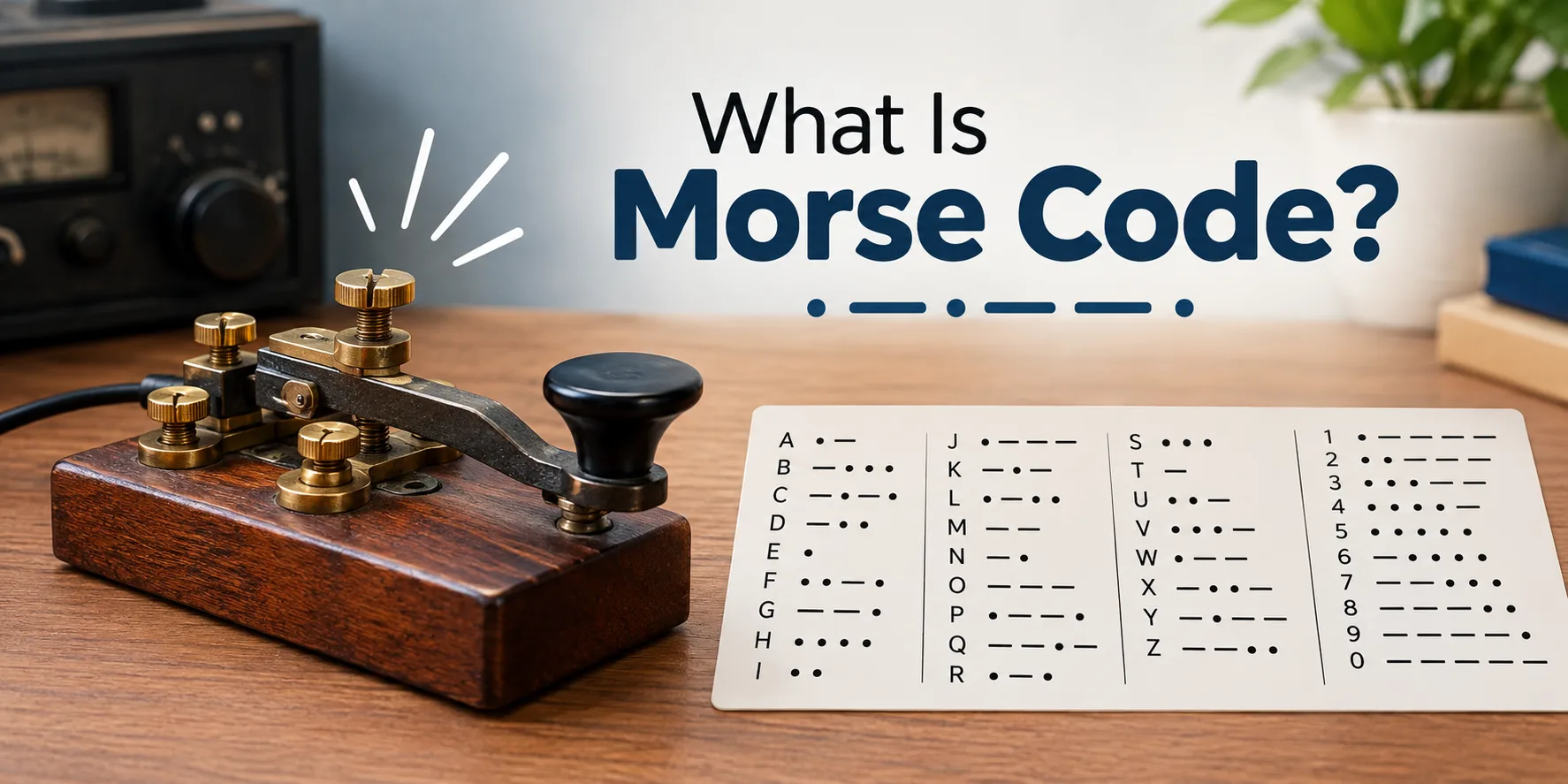
Today, Morse code can also be used as an educational activity. Students can learn the patterns, encode words, decode messages, and create challenges for their classmates.
Examples:
A = .-
B = -...
C = -.-.
D = -..
E = .
H = ....
S = ...
O = ---
How Does Morse Code Work?
Morse code uses different combinations of dots and dashes to represent individual characters. A dot is a short signal, while a dash is a longer signal.
For example, the word SOS is written as:
... --- ...
Each letter has its own pattern, and spaces help separate one letter from another. When students receive a Morse code message, they can use a Morse code chart to identify each pattern and convert it back into letters.
Morse code can be sent in different ways. Students can write it on paper, tap it on a desk, make sounds, or use a flashlight to send signals. This gives teachers different ways to create classroom activities.
How to Create Morse Code Challenges for Students?
Teachers can create Morse code challenges by starting with simple words and gradually increasing the difficulty. The following steps can help you create an activity that matches your students' skill level.
Choose the Learning Goal
First, decide what students should learn from the activity. The goal could be learning Morse code characters, practicing decoding, creating messages, or working with a partner.
For example, a beginner activity can focus on recognizing individual letters. An advanced activity can ask students to decode a complete message.
Select the Morse Code Characters
Choose the letters, numbers, or punctuation marks that students will use in the challenge. If students are learning Morse code for the first time, start with a small number of characters.
For example, you could begin with:
E = .
T = -
A = .-
N = -.
S = ...
O = ---
Once students become comfortable with these characters, you can add more.
Create Short Words or Messages
Use familiar words when creating the first challenges. Short words are easier for beginners to decode and can help them understand how individual characters work together.
For example:
.... . .-.. .-.. ---
Students can use a Morse code chart to decode this message as HELLO.
You can then move to short phrases and sentences as students improve.
Combine With Fancy Text
You can also combine Morse code with different text styles to make challenges more engaging.
Fancy text: Use decorative text for hidden clues or challenge headings.
Cursive text: Write clues in cursive text and ask students to decode the Morse message first.
Glitch text: Use glitch text for secret messages or harder challenge levels.
Add a Challenge Format
Choose how students will complete the activity. A written worksheet is useful for beginners, while more interactive formats can be used after students understand the basics.
Some options include:
Decode a hidden word
Convert English words into Morse code
Match letters with Morse patterns
Decode a secret message
Send a message to a partner
Complete a Morse code scavenger hunt
Solve a series of Morse code clues
Add Different Difficulty Levels
Create several levels so students can progress as they learn.
Easy: Give students a Morse code chart and ask them to decode short words.
Medium: Give students short messages and allow limited use of the chart.
Hard: Remove the chart and ask students to decode longer messages or a series of clues.
You can also add a time limit for students who are comfortable with the code.
Turn It Into a Team Challenge
Divide students into small groups and give each group the same Morse code message. The group that correctly decodes the message first can move to the next challenge.
Another option is a message relay. One student encodes a message, another sends it using taps or sounds, and another student decodes it.
This can help students practice both sending and receiving Morse code.
Create an Answer Key
Prepare an answer key before giving the challenge to students. Check every Morse code pattern carefully so students do not learn an incorrect character.
For longer activities, keep the original English message next to the encoded version. This makes it easier to check answers and identify mistakes.
How is Teaching Morse Code to Students Helpful?
Morse code activities can give students practice with patterns, communication, decoding, and problem-solving. They can also make a regular lesson more hands-on.
Pattern recognition: Students learn to identify different combinations of dots and dashes.
Encoding and decoding: Students practice changing information from one form to another.
Problem-solving: Students need to work out the meaning of an unfamiliar message.
Attention to detail: A small change in a Morse code pattern can represent a different character.
Communication: Partner activities allow students to practice sending and receiving messages.
Teamwork: Group challenges give students a chance to solve messages together.
Hands-on learning: Students can use writing, tapping, sound, or light to work with Morse code.
Best Practices for Using Morse Code Challenges
A few simple practices can make Morse code activities easier for students to understand and complete.
Start with short words: Long messages can be difficult for beginners.
Give students a reference chart: A chart can help students learn the code while they practice.
Make letter spacing clear: Separate each character so students can tell where one letter ends and another begins.
Increase difficulty slowly: Move from individual letters to words, phrases, and longer messages.
Use familiar words: Common words are easier for students to decode than unfamiliar ones.
Test every challenge: Check the Morse code before giving the activity to the class.
Use different formats: Try written messages, tapping, sounds, or flashlights to keep activities varied.
Adjust the activity by age: Younger students may need shorter messages and more support.
Focus on accuracy first: Let students become comfortable with the code before adding strict time limits.
Allow teamwork: Pair or group activities can make the challenge easier for students who are still learning.
Final Thoughts
Morse code challenges can turn a simple lesson into an interactive activity. Students can learn the basic patterns, decode messages, create their own codes, and work with classmates to solve challenges. Teachers can start with individual letters and short words before moving to longer messages, timed activities, or scavenger hunts.
The key is to match the difficulty with the students' current skills. With clear instructions, accurate Morse code, and simple challenges, teachers can make the activity useful and enjoyable.
People Also Ask
What is a Morse code challenge?
A Morse code challenge is an activity where students use dots and dashes to encode, decode, or send messages. Teachers can use words, sentences, clues, or puzzles for these activities.
How do you make a Morse code activity?
Choose a learning goal, select the characters students will use, and create short words or messages. You can then add a format such as a worksheet, team activity, relay, or scavenger hunt.
What can students use to send Morse code?
Students can write Morse code on paper or use taps, sounds, and flashlights to send signals. The method can be selected based on the classroom setup and students' age.
How can you make a Morse code challenge harder?
You can use longer messages, remove the reference chart, add punctuation, or introduce a time limit. You can also create several clues that students must solve in order.
Is Morse code suitable for young students?
Yes. Young students can start with a small number of letters and short words. Teachers can provide a Morse code chart and increase the difficulty as students become more familiar with the patterns.

Admin
Admin is a professional and creative specializing in the latest stylish font styles for social media and brand promotion. With a passion for modern typography and digital trends, Admin helps users create eye-catching text that stands out online.